

Howdy and hello! It is time for another issue of the newsletter for Special Education Today. I know,,,boring + boring = boring, but I hope you are ready for it! Grab a suitable beverage settle in for this issue which covers the week that began 12 January 2026.1
According to my Substack dashboard, this is the 1510th post for SET. I do not want to argue that the exact number of posts particularly important, but I do like the perspective that it provides about the history of our community. And many members of the community will be able to predict the overall content that’s coming: (a) photo, (b) update on SET’s status, (c) catalog of posts, and (d) comments.
Photo
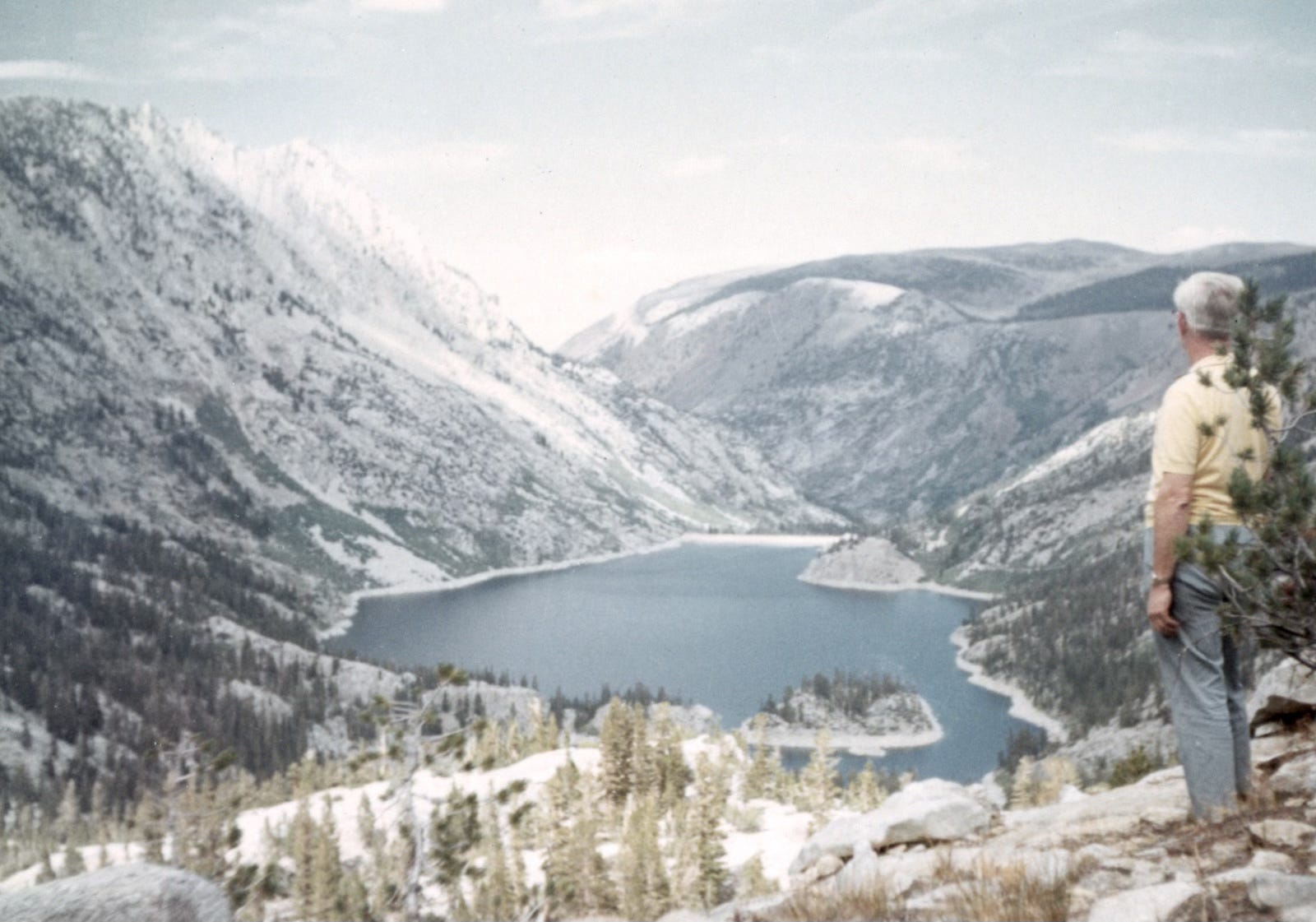
My brother and my father took a multi-day hike in the Sierra Nevada mountains in the 1970s. I think it was a wonderful trip for my father, because it was not only a chance to spend some quality time with his son, but also an opportunity to do something he had not done previously. They apparently got to see some marvelous sites, as shown here.
SET status
As of this past week, Substack indicated that there are nearly 1100 subscribers for SET. Hooray! Eight folks joined the community this past week. Welcome to this week’s fresh faces!
Alexis F., and Jen S. joined the supporters this week—welcome and thanks, Jen and Alexis! You joined with other contributing subscribers, including2 Kristen A., Jennilyn A., Pepper S., Judy B., Luann J., Luann D., K. Lenz, Tom Z., Little Red H., Paige P., Pei, Cheryl Z., Ann R., Nancy M., and Nancy S., Blaine G-Mc., Jean S., Jim F., Wayne, Candace S., Mary R., Meg D., Amanda H., Pam S., Cindi S.,, Anna O., Angelique W., Jenni R., Callie O., Alix H., Bill R., Joel I., Gerry W., Mike C., Cince C., Tim H., and at least 80 others. Y’ll rock! Along with patrons Mike G., Anita A., and Kathy M., you aer the reasons that SET can do lots of what it does.
Jane B. and Nancy S. posted comments this week. Jane just ran away from the field by posting comments six times over the week. Jane’s been a regular regularly (teehee), and she often has something pretty sage to say in her comments (e.g., how she might use a post for one of her teacher education classes.) I keep hoping some other supporting subscribers will follow her lead, engage with what she adds to the comment sections.
Also, Dear Readers, please share SET in whatever ways you can. Copy and share URLs, forward posts; talk about SET in your meetings, classes, or hikes with buddies…or just click the share button.
SpedLets
As probably most readers of SET know, I sometimes get confused. (“Sometimes” might be an underestimate.) So, as I was looking at the heading for this section, I was thinking…”Now, did Joel suggest ‘spedlets,’ spedlettes,’ ‘setlets,’ or what?” I’m going with “spedlets” this week, and hoping that Joel will drop a comment that corrects me and maybe even explains the thinking behind his suggestion for the name for this section of the newsletter.
Regular posts
Special Education Today newsletter 5(28): Might you want to read more drivel in yet another SET newsletter?
IARLD Montague research award for 2026: What is the award and how does one apply for it?
Evidence Advocacy Center released special education resources menu: What can one learn about evidence-based practices?
Looking back: “Research proves what?”: What about this post from LD Blog in 2005?
Friday photos: A couple of psychologists: Am I lucky or what?
UK groups champion legal rights of SEND kids: Who’s saying what and why?
For the faithful
W. Greenough honored by American Institute of Architects in Virginia: How does a man with autism receive such an honor? [paid]
Systematic and explicit PD: Being some notes about how we might do a better job of teaching teaching [paid]
Subscribers—both supporting and free—know the value of getting immediate notices of new posts. Join with them by subscribing to SET.
Comments
Sometimes I consider posting satire. I feel a little burr under my saddle. Usually it is a sense of irritation at some of the poppycock that confronts me when I search the Intertubes for something about teaching or education. I start fantasizing about writing something that mimics the bologna one encounters.
I start thinking of drafting parody posts with headlines such as these;
Science Reveals What Teachers Really Need to Know
Six Secret Ways to Make Learning Easy
Brain Scans Show How to Make Memories Stick
New Accounts of Math Mysteries Solved
Science of Education Documents What Has Gone Wrong in American Schools for the Last 200 Decades
Clickbait headlines. Now let me note that I just created those bulleted items myself. They are fabricated—totally. However, Dear Readers, they may have a familiar ring to them.
Get ready to use your "Yes-No” card to answer. Have you see headlines like those?Pause and wait.] Thank you! I thought you had.
Our buddy, Jim Kauffman3 and I used to dream up some whoppers. We wrote one as a “brief report” and actually sent it to a journal. We proposed that there were good applications for cloning in behavior analysis. Human clones could be used in multiple baseline studies across individuals, thereby blunting criticisms about heterogeneity among participants. If clones were used to collect inter-observer agreement data, the training procedures would be easier and obtaining high levels of IOA would be more likely. Etc. Our submission was rejected.
As we talked about these flights of fancy, we fretted about whether they might be taken seriously. We were wary, and that wariness seems (in retrospect) to be warranted. There was, for example, the case of the hoax paper that Alan Sokal submitted to the academic journal, Social Text; Professor Sokol made up a lot of gobbledegook using language that commonly appeared in articles published in journals like Social Text. The hoax made the New York Times (Scott, 1996). In addition, writing in the Smithsonian, Ben Panko (2016) described how some creative (shall we say) reports have also been mistaken as true.
So, I will not follow through on the urge to write them. They because might be mis-taken. In addition, I suppose that taking the time to write them would be using time I could instead devote to writing serious posts. However, “never say never.” That itch might just need to be scratched some time. And, do allow me to suggest that you write to me directly to learn more about a new invention that I hope to make commercially available in the near future (use “Instant Water Kit”4 in the subject line).
Meanwhile, please remember to watch out for spoof or parody reports. It’s sometimes hard to distinguish them from the real stuff, perhaps because the real stuff sometimes seems far fetched.
Also, take care of yourselves and your kids, colleagues, and parents). Keep the special education community safe. And be sure you're using evidence-based methods to help our kids to survive and thrive. That’s right: Remember to teach our students well.
With a dash of whimsey,
JohnL
John Wills Lloyd, Ph.D.
Founder and Editor, Special Education Today
References
Panko, B., (2016). Once a Year, Scientific Journals Try to Be Funny. Not Everyone Gets the Joke: Holiday editions add a much-needed dose of humor to boring journal-ese. But is entertaining readers worth the risk of misleading them? Smithsonian, 19 December 2016. https://www.smithsonianmag.com/science-nature/once-year-scientific-journals-try-be-funny-not-everyone-gets-joke-180961512/
Scott, J. (1996). Postmodern Gravity Deconstructed, Slyly. New York Times, 18 May 1996. https://www.nytimes.com/1996/05/18/nyregion/postmodern-gravity-deconstructed-slyly.html
Footnote
The week ended on the 115th anniversary of my father’s birthday. He died nearly 30 years ago, but I still miss him.
As usual, I’ve identified people by first name and initial, thus providing a little anonymity for subscribers. As I mentioned previously, that form of identification is also a little leftover from when there were two faculty members named “John” on the UVA faculty in special education. I distinguished myself from the late John Mesinger by signing my notes as “JohnL.”
Jim actually wrote a couple of pieces of this sort, but they didn’t attain wide circulation. Others whom palled around with Jim (I’m looking at you, Mike N. and Dan H.) will remember the fly papers and the petition to create an organization for educating dead people.
The kit is really easy and safe to use. Just empty the kit into a glass or other vessel, add water, and voilà.
John, Sorry about the delay, we were away for a few days. I have no idea which version of spedlet I was thinking and I assume I was just playing around and thinking of a small item of interest that you always include. Kinda like ringlets, droplets, or in consideration of one of your interests, eaglets.I think the copyright has expired by now so consider them in the public domain for your use, as you wish.