

Dear Readers. I regret that this newsletter comes to your mailboxes while you are probably under water with horror, sadness, grief, and more about the killing of so many of we humans around Earth. As you know, I harbor substantial regret about those sorts of incidents, not the least because individuals with disabilities may be at special risk in such situations.
If the goddesses, the genies, the swamis would grant me just one wish, I would implore, beseech, and beg that people would live in peace. Sure, it would be cute to wish for multiple addition wishes, but peaceful relations would be at the top of my list. It would be so much easier to work on so many other issues, if we could establish that baseline condition, that setting variable.
But, I know that you, DRs, did not sign up to read me pushing my personal socio-political views or proselytizing for my religion. So, let’s get to the newsletter.
This is the 24th newsletter for the 5th year. It covers the week that began 8 December 2025. We’re way beyond 200 newsletters and, in fact, this is > 1500th post for Special Education Today.
Big surprise? The contents of this newsletter include a photo, an update about the status of SET, a catalog of the recent posts, and an editorial.1
Photo
When one is a lucky as I am, one gets to hang around with kind, accomplished, smart people. I attended a meeting this past week and my luck held. I drew a pair of aces.
Looking at this photo, savvy readers among us will say, “Whoa! That’s royalty right there!” They would be right!
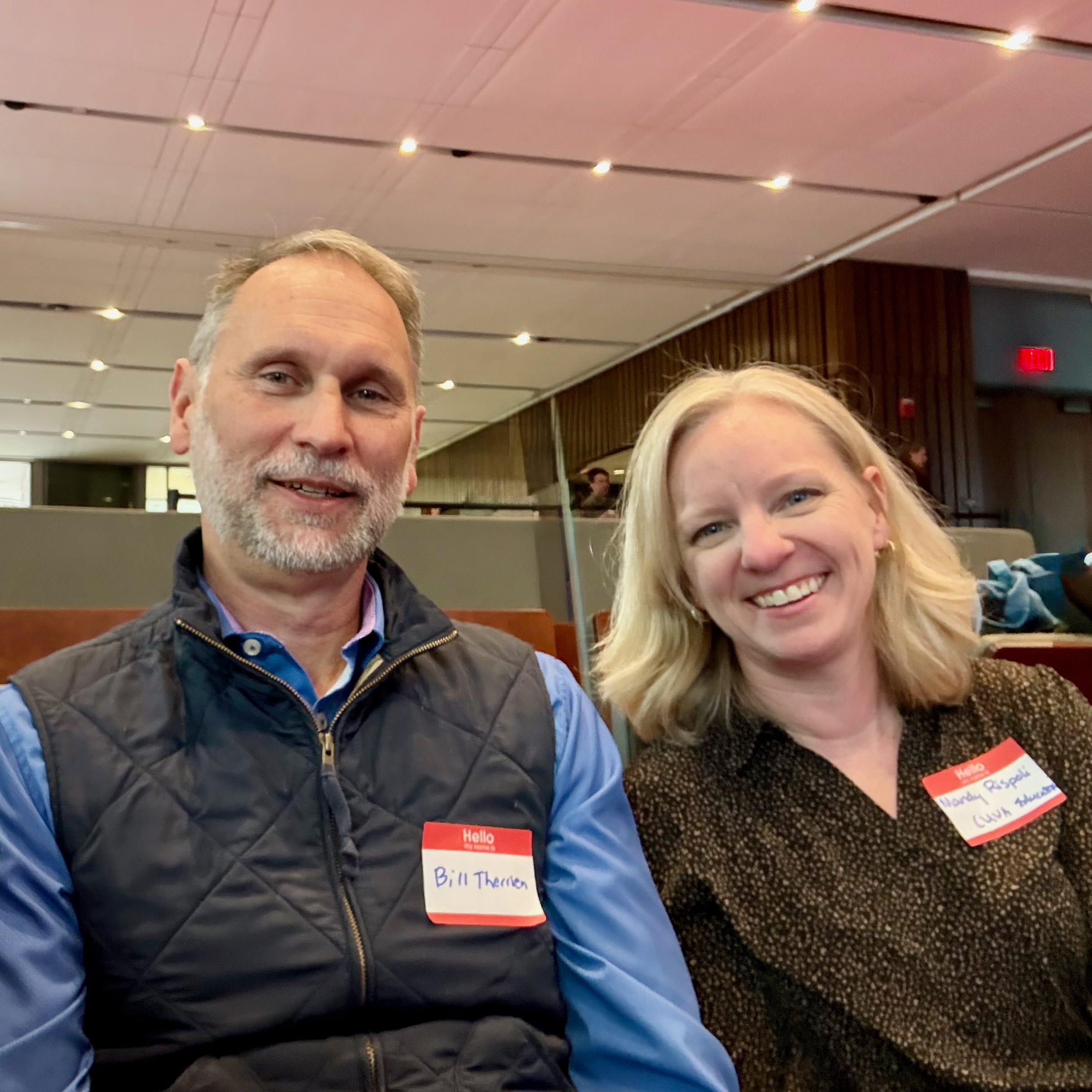
The Center for Open Science convened the meeting. COS is an organization that promotes the idea that scientific practices (regardless of discipline) should be publicly documented. intellectually accessible, and freely available.
Researchers, publishers, and others in the scientific world shouldn’t hide what they do. They should show their work. They should make science open.
So, it should come as no surprise that astute and influential researchers who edit important journals related to special education—Mandy and Bill—would attend the COS meeting. These two people are currently or have previously edited scholarly journals on which lots of us depend for academic research: Behavior Modification, Exceptional Children, Journal of Positive Behavior Interventions, Journal of Special Education, and probably some I’ve forgotten.
So watch out for them. Practice looking at this photo and others from SET here and here2 so that you can recognize them if you’re at a professional event. If you do see them, I encourage you to introduce yourselves. In addition to being scholars and esteemed leaders, they are wonderful human people and would likely begin to chat with you right away.
Update
OK, folks. SET has passed a couple of milestones. As noted previously, there are greater than 1000 subscribers and there are greater than 100 supporter.s Both of these are pretty dang rewarding to me. Although not everyone reads each and every post on SET, a lot of those 1000 subscribers do, and they share posts with others.
And, especially importantly, those 100 paid subscribers allow SET to go to lots of readers—and potential readers—who don’t pay for the privilege of reading SET. There are scores of subscribers who simply can’t afford the cost of a subscription, but those who pay for SET make it possible for readers in greater than 40 countries outside of Earth’s wealthy nations to read about special education and kids with disabilities. That, to me, is enheartening. I want the denizens of Earth to know about special education. Please help share. Let’s get additional folks to join the community!
Some folks have been with SET from the proverbial get-go. Let me just call out supporters (and this is neither an ordered nor an exhaustive list) such as Nancy C-W., Susan O., Tina C., Clay K., Michael K., Jim P., Dan H., Bev J., Joel M., Bob P., Linda L, Marilyn F., Ed. P., and (especially) Ed M. All these folks (and others) have been DRs since June 2021. Also, please note that some of these subscribers have not just shared SET but have given gift subscriptions to new folks among us. Thank you!
Special thanks to Miss W (Laughing in Special Ed) and Kelley C. (Planning Beyond the IEP) for their interactions with SET this week. There were a shipload of “likes” and comments. Thanks, Ed M., Joel M., Michael G., Callie O., and Nancy S. Y’all rock!
The week’s sped lets
Here’s a list of the posts for the past week:
Special Education Today newsletter 5(23): Is anyone interested in an update about what transpired on SET recently? [JWL]
Searching for autism and ADHD: What are the trends from 2015-2025 in Web searches for these manifestations of neurodiversity? [JWL]
E. Hanford discussed Reading First: Is there something beneficial to learn from her interview with M. Goldberg & R. Lyon? [JWL]
Increasing identification of ADHD: Why are record numbers of people receiving ADHD diagnoses occurring around Earth? [JWL]
An intelligent basis for understanding intelligence: What does an article by E. Turkheimer and D. Willingham offer educators? [JWL]
Miss W told how research changed her teaching: Can’t we learn a lot from a teacher who changed her instruction because of research she read? [JWL]
Comments
My friend and colleague, Charlie, had a terrible fall this week. He ruptured the tendon that connects his quadriceps with his kneecap and his shin on both legs. Humpty Dumpty and a big team of surgeons are putting his legs back together again. This is serious surgery and he will have weeks (months!) of rehabilitation just so he can walk again,
The surgeons will have the important technical task of reattaching the quadriceps muscles (there are four—”quad”—and the quad muscles are big) with the tendon that connects critically with the patella and the lower leg. That hinge will need to move like a well-functioning articulation between a door and a frame…but it’s human tissue, not just metal and wood.
The surgery will require anesthesization, cutting, drilling, positioning, threading, suturing, and more (“cleaning up”). All that has to happen before the patient (my pal, Charlie) even gets to begin rehab.
I’m reassured that Charlie will have anesthesiologists, surgeons, operating room nurses, rehabilitation therapists, and lots of other folks who follow research based protocols. I must be patient, waiting for the chance to walk around the UVA grounds with him again, or even into his favorite Mexican eatery (where everybody knows his name). This repair, recovery, and rehabilitation will take time—even for my young buddy.
Can you imagine what it would be like if the people treating Charlie were using the sort of “roll-your-own” interventions that are so common in special education? You’ve probably heard such proposals.
“Oh, I don’t like following those rigid protocols.”
“You know, that approach takes away my creativity.”
“Let’s try a different mix this time.”
“Yeah, that old-fashioned philosophy for incisions…you know, it’s just not my style.”
What if Charlie’s nurses, anesthesiologists, surgeons, and others just winged it? Golly! I hope Charlie’s care-providers go for scientifically validated practices. And I hope that all of us encourage our colleagues (and ourselves) to do what’s best for the Charlies under our care.
Oh, and also, please remember my common admonitions: (a) Wear your seatbelts (and make sure your children’s seats are affixed properly). (b) Get the up-coming fall vaccinations as appropriate. (c) Maintain a focus on finding joy. And (d) please, teach your children (and your teachers!) well.
JohnL
SET Editor guy
Charlottesville
Footnote
And I promise it won’t be about shootings, killings, and such.
By the way, the day that this newsletter is published in Bill’s birthday. I won't disclose his birth year, but he’s young and has lots of time to continue to help kids, families, teachers, and researchers.…just burying this little factoid in the footnotes here.