

Given that he was born in 1941 on this day of the year, it’s a fine a time to remember and celebrate the life and contributions of Martin J. Kauffman. Happy b’day, Marty!1
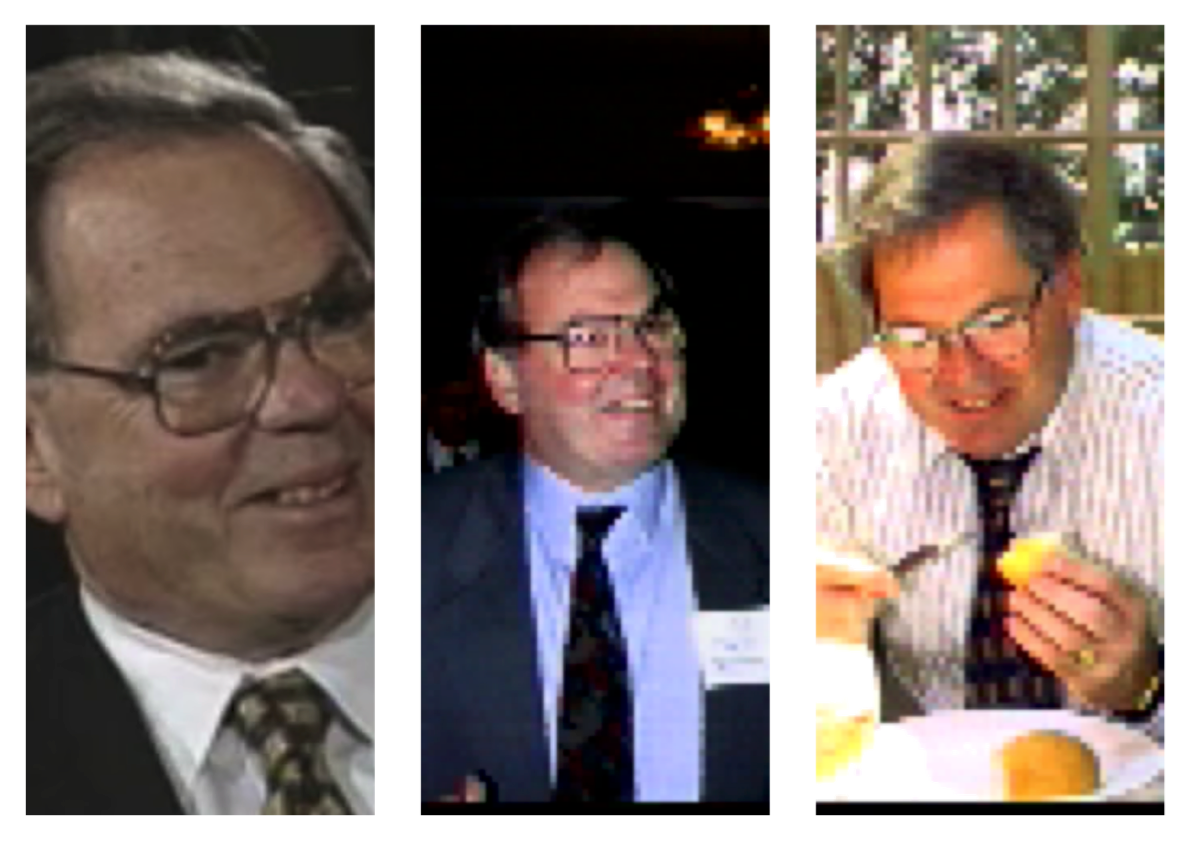
Throughout his life, Marty made powerful contributions to the education of students with disabilities, their families, and the professionals who served them. During his decades-long career, he devoted himself to improving the situations and outcomes of students with disabilities. To be sure, he held positions that allowed him to contribute to the greater good of education in general, but at his core, Marty was a special educator.
After completing undergraduate studies at The College of William and Mary, Marty did a little of this and that (with stops in New York and elsewhere in Virginia). He then continued at William and Mary, earning a master’s degree in 1965 in secondary education with a minor in special education .
Marty began his education career as a teacher, a coach,2 and a principal at schools in Washington, DC, and what are now the northern Virginia suburbs. In 1967 he matriculated at the University of Texas at Austin and began doctoral studies in special education; he earned a Ph.D. in 1970.
When Marty completed his doctoral studies, he moved to Washington, DC, to go to work for the US Department of Health Education & Welfare’s Office of Education. As the government was then structured, his office was part of the Office of Education’s Bureau for Education of the Handicapped. It was BtL (i.e., “before the passage of 94-172”) and there were, as Edwin Martin related in his book, Breakthrough: Federal Special Education Legislation 1965-1981, court cases and legislation about children with disabilities swirling about intensely. Marty learned his policy chops and contributed to advances for kids and families in what one could reasonably consider a crucible.
During those times, Ed Martin was the first Assistant Secretary of Education for the Office of Special Education and Rehabilitative Services. Ed oversaw the effort to instantiate, coordinate, and direct the US government’s special education services. Ed said, “Marty was the kind of professional who made BEH/OSERS special.” Ed characterized Marty as “dedicated, intelligent, [and] committed to knowledge.”
It was Ed. Marty, and their colleagues who created the bedrock on which special education research has grown. According to Ed, Marty encouraged the broadening of the scope of special education research and, after they got authority from the US Congress, Marty was an important player in structuring the research and innovation system as well as focusing on improvement of outcomes for kids, families, and educators.
After overseeing the Department of Education’s special education innovation and research activities for 10 years, Marty left government in 1992 and became dean of the College of Education at the University of Oregon. Although Oregon was already a leader among institutions of higher education in special education, Marty helped build its prominence and reputation until he left the dean’s office in 2005.
Outside of his government and academic roles, Marty also championed supports and services for individuals with disabilities, their families, and educators. He served on advisory boards and took roles in professional organizations. His efforts were recognized not only by the universities (University of Texas Outstanding Graduate; University of Oregon Distinguished University Professor) but also by professional organizations (the Council for Exceptional Children’s J. E. Wallace Wallin Special Education Lifetime Achievement Award). Indeed, the Division for Research of CEC named an award after him: the “Distinguished Early Career Research Award.”
As a wise government employee, I do not ever remember Marty speaking disparagingly about government policies. I don’t mean that he didn’t speak about problems or to promote change—he did have opinions. But Marty’s positions during public discussion when he was promoting the department’s positions were circumspect. When he was making private observations, however, he might question the wisdom of some policies.
Later in his career, for example, he clearly expressed his views about the reauthorization of IDEA in the late 1990s. He and Linda Lewis warned that some features of the 1997 reauthorization of IDEA were “confusing each with with all” by emphasizing broad goals such as education in the least restrictive environment. They expressed concern about how, “operationally, all may be nothing more than another means for strengthening the policy goal of efficiency at the cost of support for policy goals that focus on equity and dignity” (Kaufman & Lewis, 1999, p. 242).
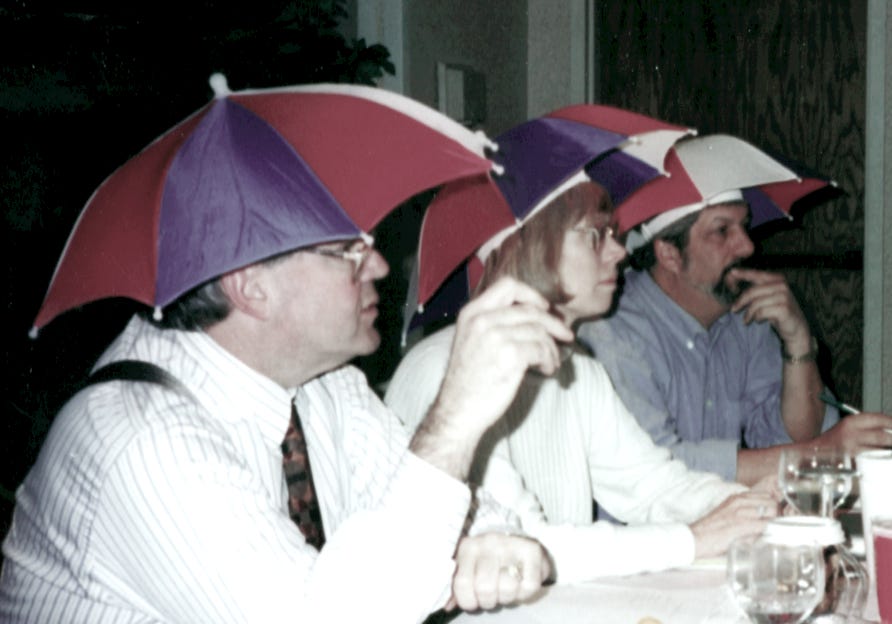
Although some might see my comments here as fawning, I don’t need to curry any favor with Marty. We were, as I mentioned, pals and I admired his contributions. I fondly remember spending time in his office in Washington, DC, talking about the quality of special education research, research-to-practice efforts, and just about anything else he mentioned. He never seemed to me to take himself too seriously, and he had a quiet sense of humor. You might catch a glimpse of it in this 1995 photo with two of his fellow presidents of the Division for Research at a meeting of the executive board.
Marty, who was born in New York City, died 1 June 2019 in Eugene, OR. Readers may wish to review the obituary at that appeared in the Eugene Register-Guard 16 June 2019 and the remembrance published by the University of Oregon news office 3 July 2019.
I think there are a lot of people in the US and elsewhere on Earth who benefitted from Marty’s work in special eduction. I encourage folks to join Marty’s wife Linda Lewis, his daughter Nicole Kaufman, and me in giving a gentle exhale to help Marty blow out the candles on his birthday cake.
Sources
Kaufman, M. J., & Lewis, L. M. (1999). Confusing each with all: A policy warning. In R. Gallimore, L. P. Bernheimer, D. L. MacMillan, D. L. Speece, & S. Vaughn (Eds.), Developmental perspectives on children with high-incidence disabilities (pp. 239-260). Routledge.
Martin, E. W. (2013). Breakthrough: Federal special education legislation 1963-1981. Bardolf.
Footnote
I’m breaking with the formality that one might be accustomed to seeing here on SET by referring to Dr., Professor, Dean Kaufman as ‘Marty.’ I like to think that we were pals, and it feels awkward to use the honorific appellations. In addition, Marty wasn’t particularly stuffy. I think he didn’t see any need to puff himself up by claiming high status.
Linda Lewis, who knew Marty well (teehee), tells a delightful story about Marty consulting with the Bill & Mary football coach about career goals. To the great benefit of special kids and teachers, the coach—Marv Levy; he was later quite famous in American football—encouraged Marty to pursue education as a career. If you see Linda, ask her to tell you the story about Marty’s football career.
I have to add one credit to John's lovely story about Marty Kaufman who would have turned 83 today. In the photo in which Marty, Jean, and Mike are pictured wearing the umbrella headgear, John failed to mentioned that he was the DR board member who supplied the umbrellas, demonstrated how to wear them, and encouraged everyone present to put theirs on!
Great story about a great individual!