

Welcome to this week’s issue of the Special Education Today newsletter. It’s the 40th issue of the newsletter for 5th year of SET. As always, this issue of the newsletter is free, so please share it far and wide! Please don’t trip on the typos!
If you are a regular reader, then you likely can predict that this issue of the newsletter includes a photo, some status notes, a list of recent posts, and a bit of editorial comment.
Photo
It’s still spring here in the SET Central neighborhood. Just east of the office, before one reaches Moores Creek (and the new construction on the far banks of it), there is a dogwood tree that Pat planted about 13 years ago. Here’s a photo from this week, as it’s verging on full bloom.
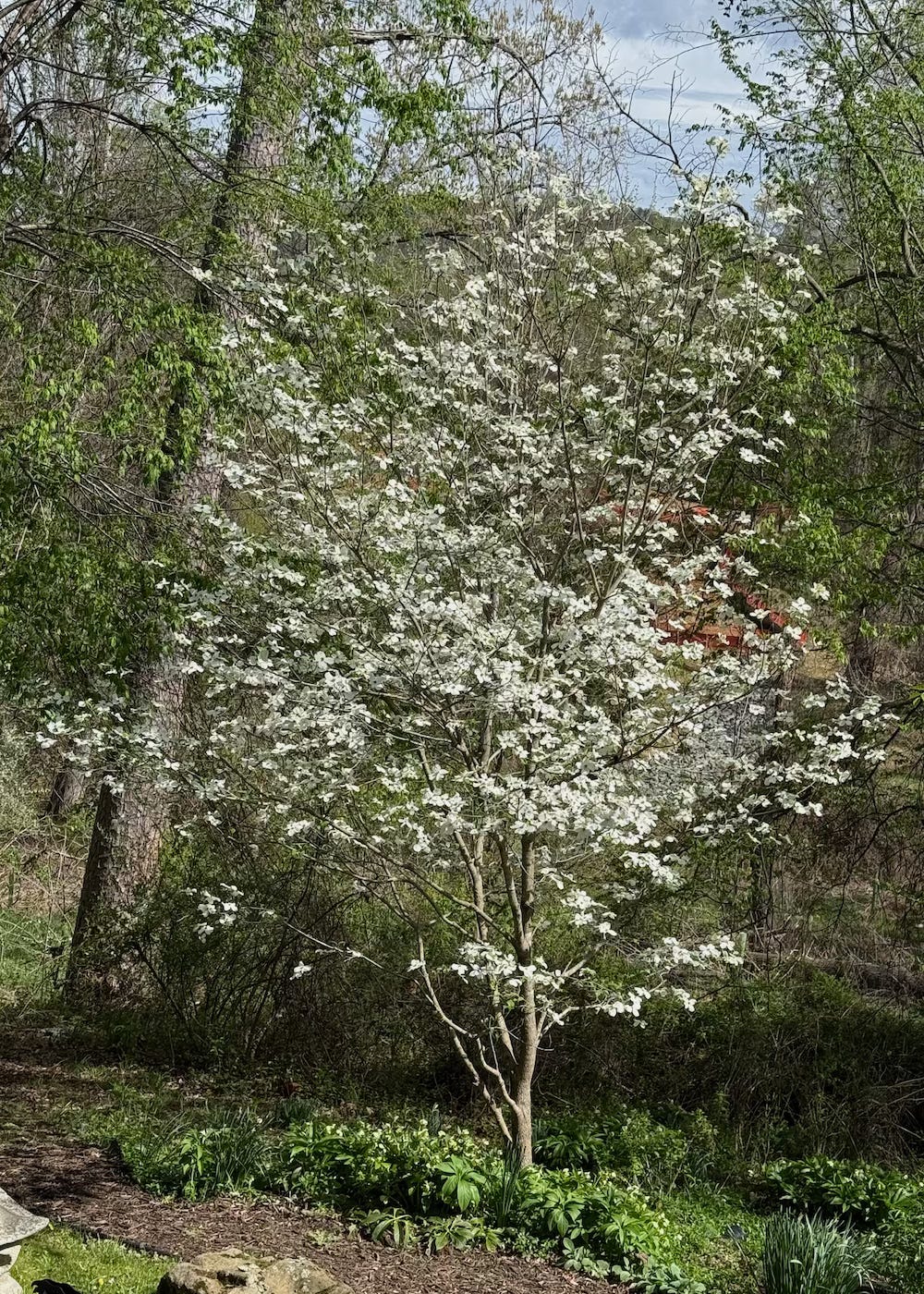
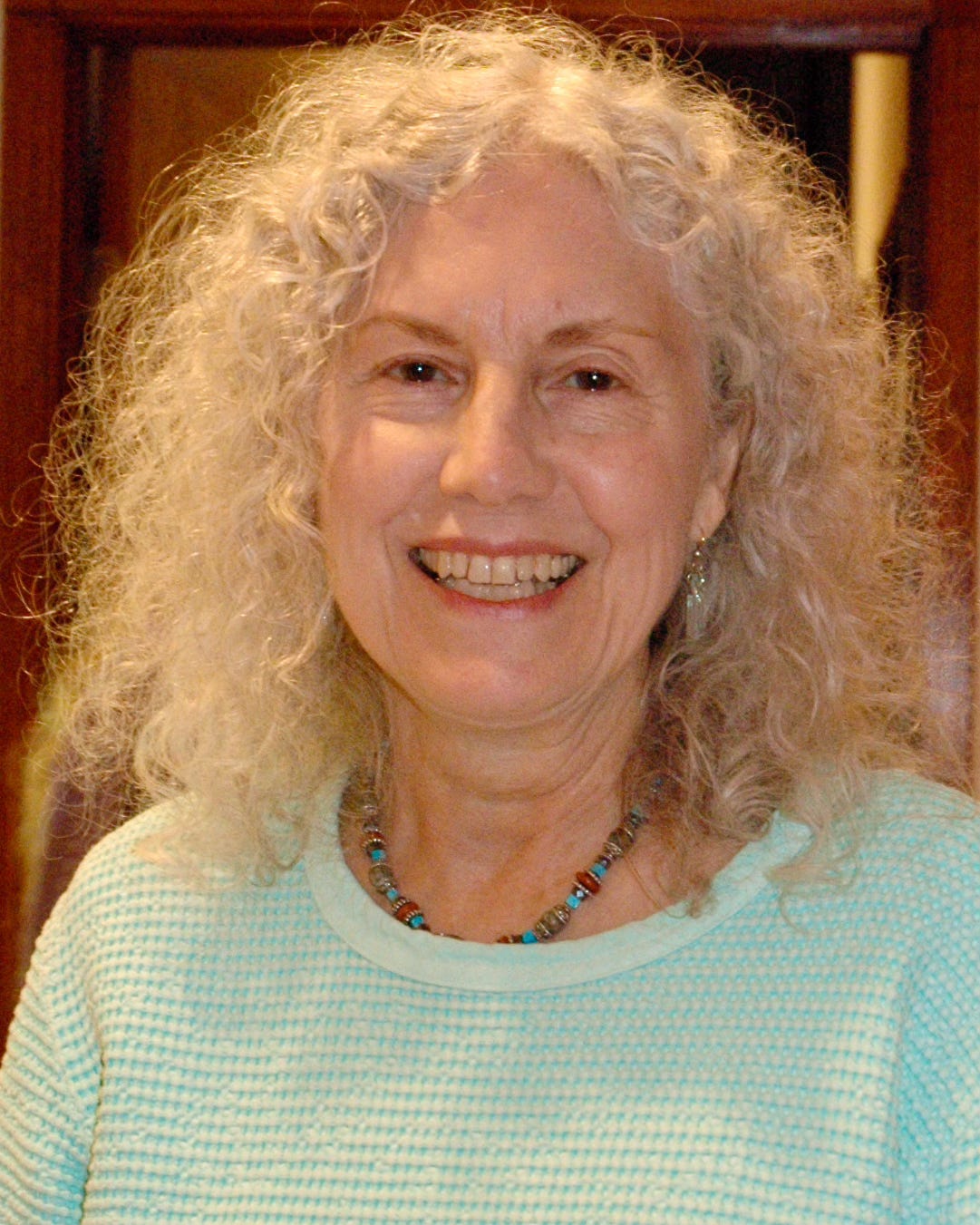
A dear friend and former neighbor gave Pat the tree as a way of remembering our pal, Pat Pullen. “Ms. P.,” as we knew her, was a superb teacher. She had the 7 -8 year old students from her special education class reading just as well as their age-mates in the general education classes. Here’s a photo of Ms. P. (who was also Jim Kauffman’s second wife):
Updates
Thanks to all you wonderful Dear Readers’ for your feedback and observations. Also, it’s a good time to say “thank you” to the fine contributing authors of SET: Li-Yu Hung (National Taiwan Normal University), John Romig (Florida State University), Ana Paula Martins (University of Minho), Mitchell Yell (University of South Carolina), Mandy Rispoli (University of Virginia), and David Bateman (university of all over the place…I’m not sure where he is this week).
A special hello to Jane S., who’s been hanging around in the community for a couple of years, but jumped into the parade with a subscription. Fireworks! Bells! Whistles! Loud applause!
Welcome to Catherine, Steven D., Via P, Angela L., Mmtocm, Assunta, Heather, Notes on Autism, Jacqueline, B., Ruth, Delar S., Solo D., Christopher D, Victoria McF., Michael (“MJ”) T., Rebecca K, Kate B., Melissa G., & Mysidia for subscribing. Thanks for signing the guest book!
As is often the case, thanks to Michael G. for dropping a comment this past week.
Thanks to the many, many (35-40?) readers who dropped likes on posts.
And, as always, a salute to Kathy M., Anita A., and Mike G. for their sustaining support. Their support at the patron level is greeting appreciated.
Spedlettes
As Dear Readers know, SET published nine articles this past week. All of them were on the public-free side, so they will be available for more than a week after their publication dates; however, note that those published early in the week will soon go into the archives where one must be a paying subscriber to SET to be able to access them. If you were too busy to review any posts as they were announced in e-mail, please content yourselves with the opportunity to review the posts listed here.
This week, John Romig dropped an editorial (and Mike G. commented on it). I wrote the others (see the brackets learn about authorship).
Special Education Today newsletter 5(39):
Here are the updates for the last week of March 2026 {JWL}
What is Ola - En helt vanlig uvanlig fyr? {JWL}
Rumors of special education offices moving out of ED:
What concerns about outsourcing special education functions resurfaced in Washington? {JWL}
Considering the dangers of over-inclusivity in education
Are there risks to including students with disabilities? {JER}
World autism awareness day again:
How will people observe this special day? {JWL}
ASAT Newsletter for autism awareness month:
What can one learn from the newsletter for April 2026 by this fine organization? {JWL}
What would a couple-a-few academics do on a Friday afternoon? {JWL}
A little meta science, if you will:
On what research did I work over the last few years? {JWL}
There you have the corpus of posts for the week that began 30 March 2026.
Notes & comments
Dear Readers who can remember that long ago might recall that last week I promised to publish some posts about the evidence that I think we need to allow us to identify evidence-based approaches. I didn’t publish them in this past week. Bad me. I’m still working on them. Instead, I got caught up in the swirl of activity emanating from publicity about the open science papers, two of which I am a co-author.
The open science papers I described in “A little meta science, if you will” are pretty relevant to our special education endeavor. There is good reason that people associated with the SET community have been promoting open science practices in special education. We know that it would be disingenuous to sell something as “evidence-based” if the evidence was suspect. So, here’s a cheer for people like Bryan Cook and Bill Therrien (see Cook et al., 2018), among others, who are out in the halls of academia encouraging special educators to adopt open sciences practices.
There is a need, in my view, for the effort to promote open science to move beyond the halls of academia, however. To be sure, many of the questions debated in open science are highly academic—whether the data analysis methods scientists used are the best ones to have used (angels dancing on pin heads?)—but a fundamental one is the same that any lay person can ask: What are the data for people’s claims? “You seem to be saying that the ZYX method is the best one for these kids. How do you know? Show me the data.”
Although I can’t find an instance of him writing it exactly, the idea of requesting that people show their data is often associated with O. R. (“Og”) Lindsley.1 Interested readers can find the general idea in Lindsley (1990, 1991, 1992). And we, Dear Readers, can apply that idea ourselves. We can just ask, at the next in-service meeting, that the presenter of the New-’n’-Groovy method to show us the data, document that it works. Once they produce the data (if they can), then we can ask such familiar questions about:
The nature of the data (Wait, are these data about kids’ actual reading? They look like what people say about kids’ reading?),
The sampling (Were those students randomly selected and assigned to treatments randomly?), and
The comparisons (Oh, okay. These data compare kids getting your special curriculum to kids getting nothing at all?).
But, first, they have to have data to show. That’s a fundamental tenet of the open science effort. Provide checkable records about the data for your studies. We in the SET community should expect those who are telling us what to do to meet that standard.
Of course, we, Dear Readers, should hold ourselves to that same standard. And those of us who are practicing according to data-based decision making models will have no trouble meeting it.
And, my Dear Fellow Travelers, I hope that you will remember how important it therefore is that we take care of yourselves and each other. Remember to get plenty of sleep, look both ways before crossing a street, buckle those seatbelts, drive carefully, eat healthily, exercise regularly, and—of course—teach your students well.
JohnL
John Wills Lloyd, Ph.D.
Founder and Editor, Special Education Today
References
Cook, B. G., Lloyd, J. W., Mellor, D., Nosek, B. A., & Therrien, W. J. (2018). Promoting open science to increase the trustworthiness of evidence in special education. Exceptional Children, 85(1), 104-118. https://doi.org/10.1177/0014402918793138
Lindsley, O. R. (1990). Precision teaching: By teachers for children. Teaching Exceptional Children, 22(3), 10-15.
Lindsley, O. R. (1991). Precision teaching’s unique legacy from BF Skinner. Journal of Behavioral Education, 1(2), 253-266.
Lindsley, O. R. (1992). Precision teaching: Discoveries and effects. Journal of Applied Behavior Analysis, 25(1), 51.
SET should not be confused with a product that uses the same name and is published by the Council for Exceptional Children. SET predated CEC’s publication by decades. Despite my appreciation for CEC, this product is not designed to promote that organization nor should the views expressed here be considered to represent the views or policies of that organization.
Footnote
One time in the early 1970s, when I saw Og present at a conference, he was using two old-style overhead projectors, switching between transparency on one or the other, often showing Standard Celeration charts on either device, flicking the power of each off and on repeatedly, and I’m pretty dang sure he said, more than once, “show me the data.”