

On 8 March 2026, the International Women’s Day for 2026, Special Education Today recognizes contributors to the advancement of individuals with disabilities and the betterment of special education. In contrast to previous posts on SET that paid homage to historical individuals and women who are so accomplished that they are routinely (and deservedly) revered,1 this year, we focus on some contributors who are early in their careers but are already doing excellent work that seems sure to advance the lives of children with disabilities, families of those children, and the teachers of the children as well as social services for those children.
This list is, to be sure, just a subjective selection of early-career women who are making valuable contributions to special education. I make no assertion that it is founded on any objective standards. These women are not necessarily the ones with the most externally funded grants, the most followers of their Substack profiles, the most citations for their academic publications, the most high-profile speeches at international conventions… the most whatever. They are just people whose work I’ve read. Sometimes I disagree with their work or approaches, but I think they are genuinely helping to move special education ahead, to make a better future for our kids.
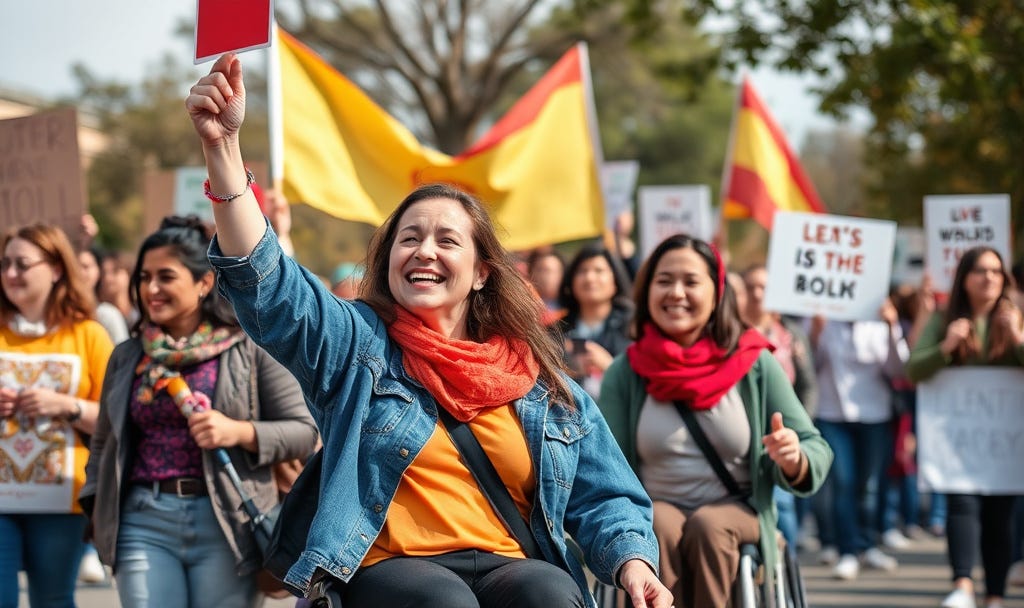
OK, so 🥁 drumroll…. In alphabetical order, 112 leaders for tomorrow: 3
Allison Gilmour, American Institutes for Research
Carly Blustein Gilson, The Ohio State Univeristy
Taucia Gonzalez, Arizona State University
Linda J. Graham – Queensland University
Shanna E. Hirsch,4 University of Maryland
Veronica Kang – University of Maryland (USA)
Sofia Santos, University of Lisbon
Phillandra Smith, University of Pittsburgh
Stavroula Sofologi – University of Macedonia
Amanda Sullivan, University of Minnesota
Alison Zagona – University of Kansas
These people are high-fliers. They’re the people on whom I would place bets as those “who will do helpful work in the near and long-term future.” I hope you keep up with them. Watch for their articles. Go listen to them when they speak publicly, ask them questions of them when your and their interests overlap.
Of course, Dear Readers, there are many (many) other women who are leading the way to better understanding of people with disabilities and how to provide beneficial special education. This list is incomplete. Please let those of us at SET know whom you think we should have included. Meanwhile, celebrate these women’s contributions and seek to further them.
Footnotes
An earlier version of this post showed 12 leaders. It mistakenly included someone who has no special education connections, so I removed that name from the list. Hat tip to Rhonda B. who caught my error! (I also took the chance to correct a couple of other mistakes in the text.)
In case you can’t tell, the list is alphabetical by last name, and so order doesn’t indicate relative importance.
I’m just putting a thumb on the scale to give extra weight to Shanna here. I have had the amazing good fortune to work with her since 2013 (or so), and I learned a lot from the experience. But, let the record show that she is providing no kickbacks for this endorsement (teehee).
I applaud Prof. Lloyd, not only because of his always impressive knowledge about what’s going on, where, and by whom, but his ability to generate a list of current researchers and influencers who are women. That requires considerable engagement and that he is so engaged makes SET required reading for me. I hope you all feel the same.
I will add just a bit of history of women in special education to remind those who are younger and newer to this field. I have written an introduction to this history, “A History of Special Education” for the fist and second editions of the Handbook of Special Education (1981, 2017 ) that readers might enjoy to go deeper.
You might say there are three or four “histories” of special education that should be read. One is a history of (usually) men who developed ideas that were the basis for much thinking about special education. Most of these men were physicians, psychologists, medical doctors, or professors in education and allied fields. You should note the absence of women from most such histories.
Second, there are (especially after 1975) histories of social processes that produced public policies that supported the realization of a “special” education of some kind, both in schools and clinical settings.
Third, there are narrow histories specific to disability types that focus on details and treatments for specific categories, like deafness, mental retardation, autism, etc.
Fourth, there are a few histories of educational practices that focus on problems and management of students by teachers in real (often public) classrooms. The chapter I noted above is in this category and the only one I know that has focused on women’s ongoing contribution to special education practice and research.
In those chapters, I argued that early special education development as it existed in schools sprang from early feminism in the first decades of the 20th century, particularly in large urban public schools. The most prominent example was Elizabeth Farrell, a teacher in New York City from 1899 until the late 1920’s and the founder of the Council for Exceptional Children.