Reporting for US NPR’s “All Things Considered,” Jonaki Mehta, Lauren Migaki, and Nirvi Shah are documenting the lived experiences of teachers of students with disabilities. Ms. Mehta and colleagues introduced their series in an article on 26 October 2026 entitled “Special ed diaries: Teachers tell NPR about their most joyous, most difficult moments”; an 8-minute audio segment about the series is available in that report.
The reporters have about a dozen teachers with whom they have open lines of communication, allowing the teachers to describe aspects of their jobs. Here is the reporters’ description of their methods:
NPR set out to hear directly from about a dozen special educators from around the United States’ public schools to learn what it takes to do their jobs day to day. They have been sharing snippets of their lives through voice memos since the start of the school year, and some will open their classroom doors to NPR in the coming months.
Some parts of the story the reporters tell will be familiar to readers. For example, there is a substantial demand for special education teachers. They also discount some myths about the positions. For example, they explain the challenging or difficult-to-teach nature of the students is not the reason teachers do not take and persist in special education positions. These teachers clearly are there for our kids.
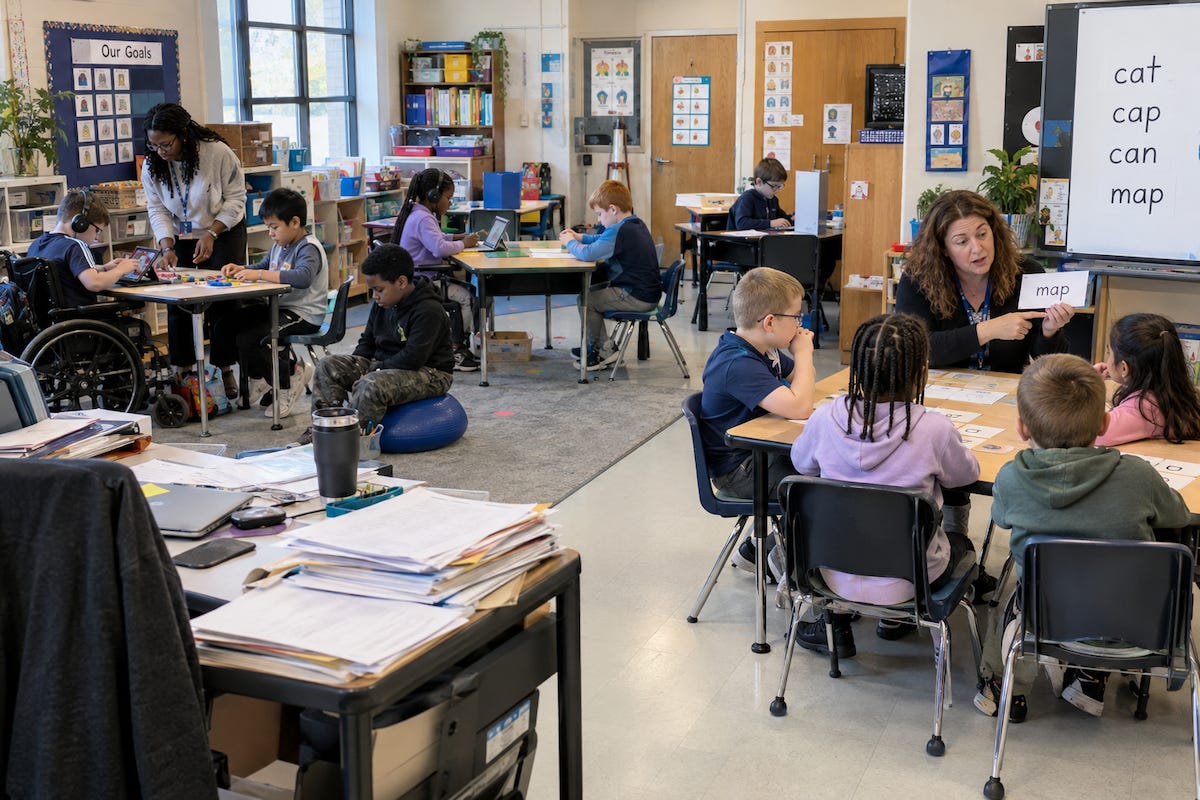
The reporters also captured familiar difficulties. Case loads. Long hours. Paper work—especially preparing Individualized Education Programs.
The teachers whom the reporting team interviewed seem to cover the gamut of special educators. They are from multiple sites. They teach students with diverse disabilities (autism, blindness, physical disabilities requiring wheelchairs, etc.). They sound real (probably because they are!).
The reporters also caught up with at least one person who studies the profession. They have quotes from Elizabeth Bettini, a professor at Boston University whom we have cited here on SET previously. Professor Bettini is one of the foremost scholars on teachers in special education and her academic work is strongly grounded in respect for those who teach. I suspect the reporters will return to her for expert analysis in the subsequent installments of their series.