

Remember that teaching changes brains. Right? If you need a refresher, take a moment to read this post. In that earlier post, I posited that our human infatuation with the idea that brains cause behavior change might be bassackwards. Maybe it is that behavior causes brain changes. Here is another Illustration of the idea that education changes brains (if not minds).1
Human brains have lots of parts, but of particular interest here is “white matter.” Usually contrasted with “gray matter”—which is of interest because gray matter has those bazillions of neurons that process (uhm) thoughts—white matter is the lighter and smoother looking stuff one sees in images of cross sections of brains.
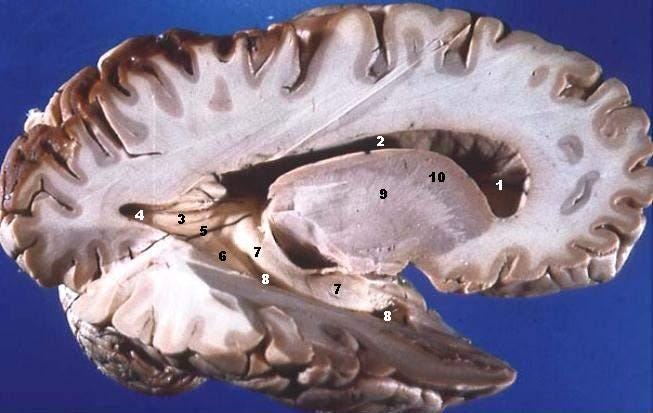
White matter mostly consists of sheaths of neural material (“myelinated axons”), long strands of neurons wrapped by a cover. White matter is important, because communications pass along those myelinated axons, providing communication paths among the parts of the brain.
Professor Ethan Roy and colleagues (2024) examined the relationship between schooling and changes in white matter. They found that educational opportunity is correlated with the development of white matter.
