

As explained by US organizations such as the American Society for Deaf Children, National Deaf Center, and others, September is Deaf Awareness Month. One of the stories that is making the rounds is about Curtis Pride, a man who had a Major League Baseball career from 1993-2006, coached a college baseball team, and served as a member of the President’s Council on Fitness and of MLB’s “Ambassador for Inclusion.”
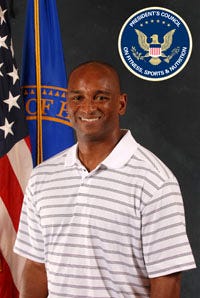

Mr. Pride was born deaf because of rubella. His parents and teachers educated him in oral speech. As a school boy, he not only excelled in athletics but also was a stand-out in academics. Although he was selected in the MLB draft when he became eligible to play professional basketball, Mr. Pride enrolled in William & Mary University on a basketball scholarship; he played baseball in the summers and graduated in four years with a degree in finance.
In addition to his other activities, Mr. Pride and his wife Lisa lead a small, not-for-profit foundation. It is called “Together With Pride Foundation Inc.”
In 2025 Mr. Pride and Doug Ward published a biography entitled, I Felt the Cheers: The Remarkable Silent Life of Curtis Pride. The foreword, written by baseball great Cal Ripken, Jr., explained the book’s title:
On a September night in Montreal in 1993, Curtis Pride got his first Major League hit, prompting a long, emotional standing ovation from the crowd of 45,757 fans. Profoundly deaf since birth, Pride couldn’t hear their thunderous applause. But as the cheers grew louder and more insistent, he realized he was feeling those vibrations within his chest—an undeniable acknowledgment of an extraordinary achievement.
Here are links to some media coverage of Mr. Pride’s life:
Writing for the LA Times, Kevin Baxter published an extended story about Mr. Pride’s baseball career (he played for many years the the Los Angeles Angels pro team) as well as his history of advocacy.
Curtis Pride was born deaf, and when he started playing baseball he was doing it mainly for himself. But the closer he got to becoming the first deaf major leaguer in nearly half a century, the more he realized he was actually playing for a far bigger audience.
“Growing up, I never really had a role model,” [Mr. Pride] said. “I wanted to be that person because I wanted to tell people that no matter what kind of disability you have, we should not let those disabilities stop us from pursuing our golden dream.”
Bill Francis published “Pride Brings His Story to Cooperstown,” 29 August 2025. Mr. Francis’s piece for the US National Baseball Hall of Fame and Museum, which included observations by Mr. Ward, revealed some telling—and saddening—details about Mr. Pride’s baseball.
Curtis Pride was a journeyman outfielder whose baseball story included stops in a half-dozen big league outposts. But the fact that he reached the sport’s highest level, despite being deaf, is what makes him an inspiration.
For the baseball geeks among the Dear Readers of Special Education Today (and I know there is more than one of you), Baseball Reference has a complete recounting of Mr. Pride’s baseball statistics.1
Footnote
One of you geeks will be especially interested in the fact that the photo of Mr. Pride in the Baseball Reference entry show him wearing the cap of the Detroit Tigers.