

In the Washington Post for 16 August 2026, Ariana Eunjung Cha reported the day-to-day experiences of Annie Morgan, a mother of three who provides the extra support needed by one of those children who has a disability. In “She spent years as a caregiver. The emotional toll mounted quietly: As a teenager, she was an Oakland Raiders cheerleader. Now, like millions of Americans, she spends her days as a caregiver,” Ms. Cha provided an extended account of the activities of a caregiver and the toll providing that care takes on Ms. Morgan. Although Ms. Cha contextualized her report with statistics about caregiving in general, Ms. Morgan’s experiences are clearly connected to the case of Ms. Morgan’s daughter, Ava, who has Angelman syndrome.
The difficulties of caring for someone with a disability like Ava’s will be readily recognized by many parents among readers of Special Education Today and familiar to many educators, as well. In her article, Ms. Cha reported about those difficulties that Ms. Morgan encountered and explained that millions of people in the US face them regularly in providing for children and adults.
Annie Morgan wrapped her arms around her eldest daughter’s waist and guided her toward the minivan, the two of them moving in a slow, sideways shuffle.
At 13, Ava was nearly as big as Annie, who stands just five feet flat, 110 pounds.
The morning in May had started well. Ava was cooperative and calm, and Annie, 34, smiled as her two other children bolted past them and into the car. Then something shifted. As Annie helped Ava into the vehicle, Ava wailed and slammed her body against the seat. The car rocked.
“Gentle hands,” Annie said evenly. “We’re okay. We are still going to school.”
The struggle lasted six minutes: long enough for Annie to tighten one belt, then another. Long enough to block a blow to the head, catch Ava’s hands and dodge them when she couldn’t. Long enough for sweat to gather across Annie’s forehead and beneath her shirt.
When she finally settled into the driver’s seat, the clock read 7:49 a.m. Still on time for school (basically).
In one form or another, scenes like this unfold every morning in millions of American homes. Sons and daughters lifting aging parents out of bed. Spouses managing medications. Parents helping adult children get dressed.
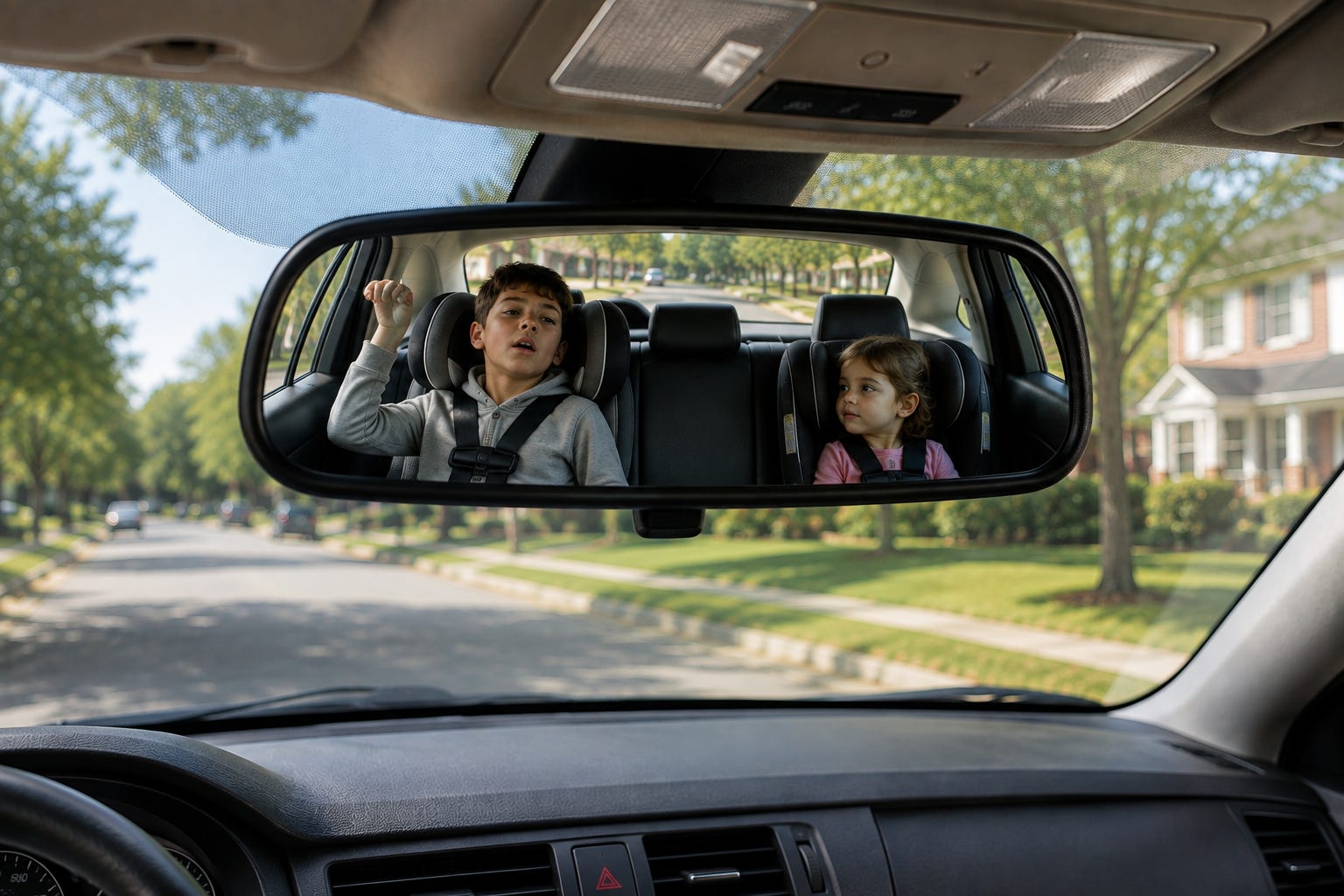
The Post article included multiple pictures by Rachel Bujalski that merit a look.
Ms. Morgan apparently has a presence on social media, but I’m not adept at finding things on Instagram or TikTok. If a Dear Reader locates the proper sources, please post links in the comments.
Ms. Cha’s reporting seems sensitive and accurate to me. I hope that her article prompts people to appreciate the contributions of caregivers to the well-being of our kids.
Learn more about Angelman syndrome from the US National Institute of Neurological Disorders and Stroke resources and from the Website of the US Angelman Syndrome Foundation.